
Stuga ’66: The Lake Tahoe A-Frame Renovation Project That Shaped Host House
There are homes you renovate. And then there are homes that quietly change the direction of your life. Stuga ’66 was the latter. After years of building a career in event planning and brand marketing — orchestrating experiences that lasted a single evening — little did I know that a 1966 A-frame in Lake Tahoe would shift everything.
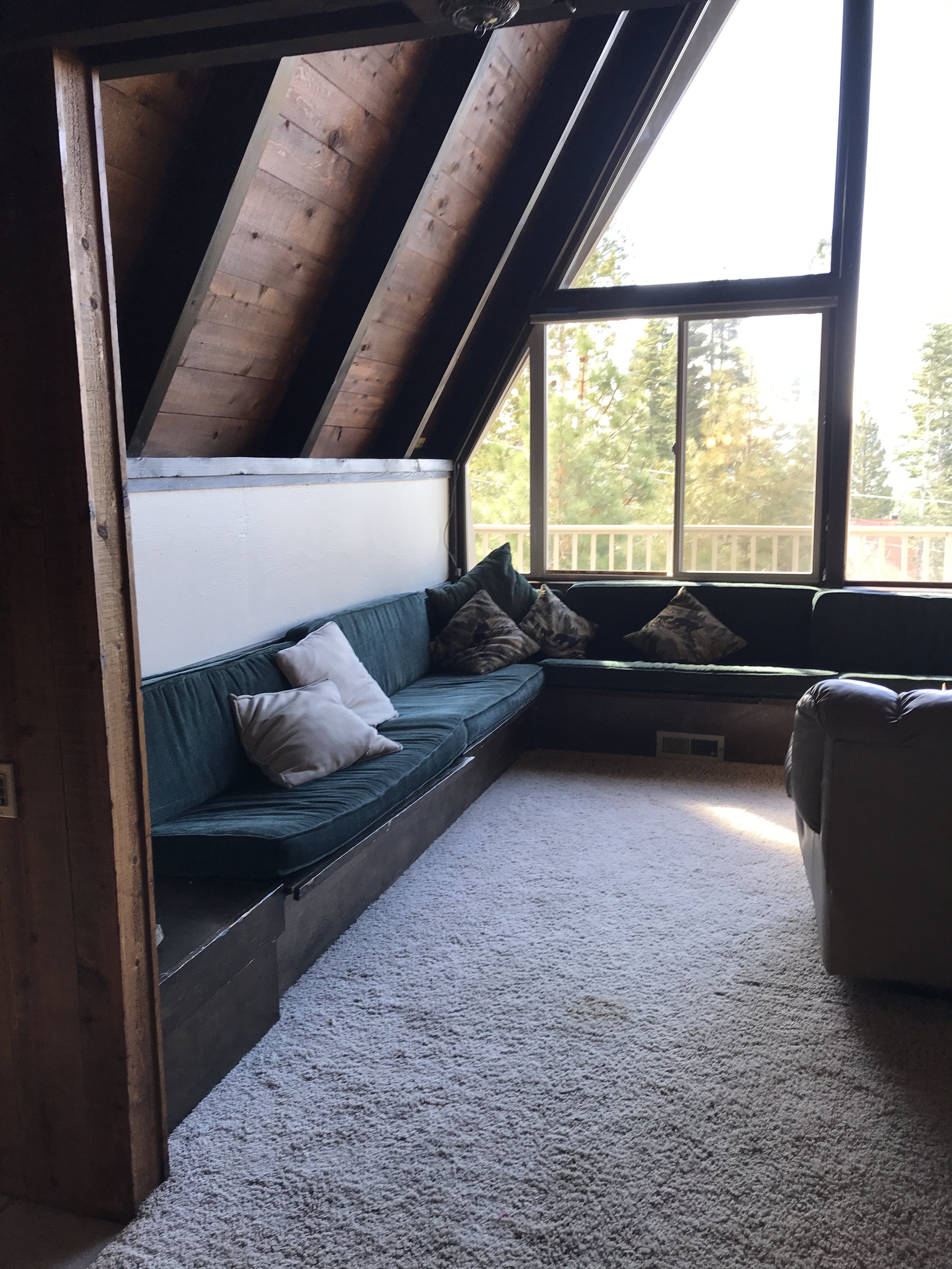
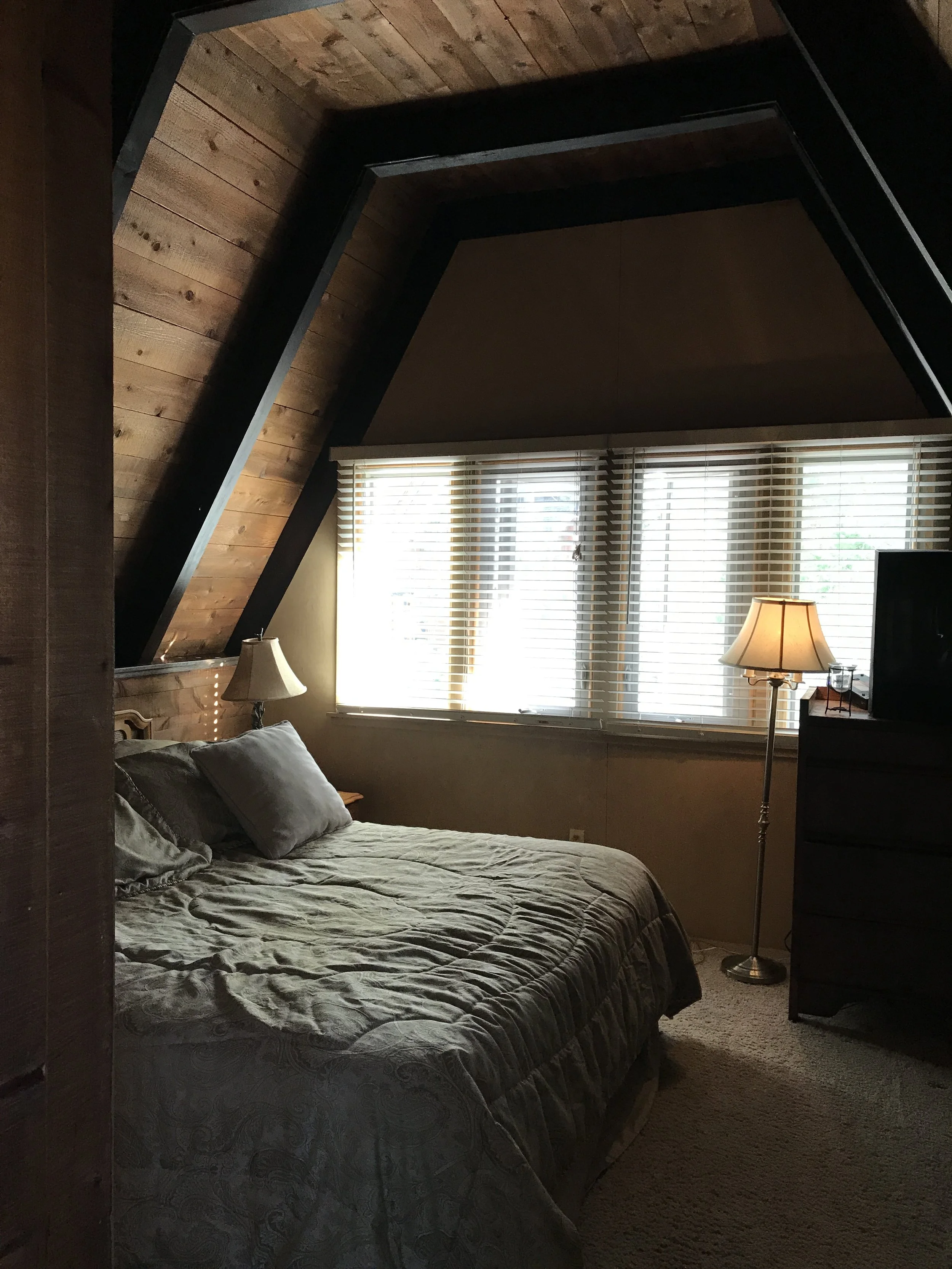
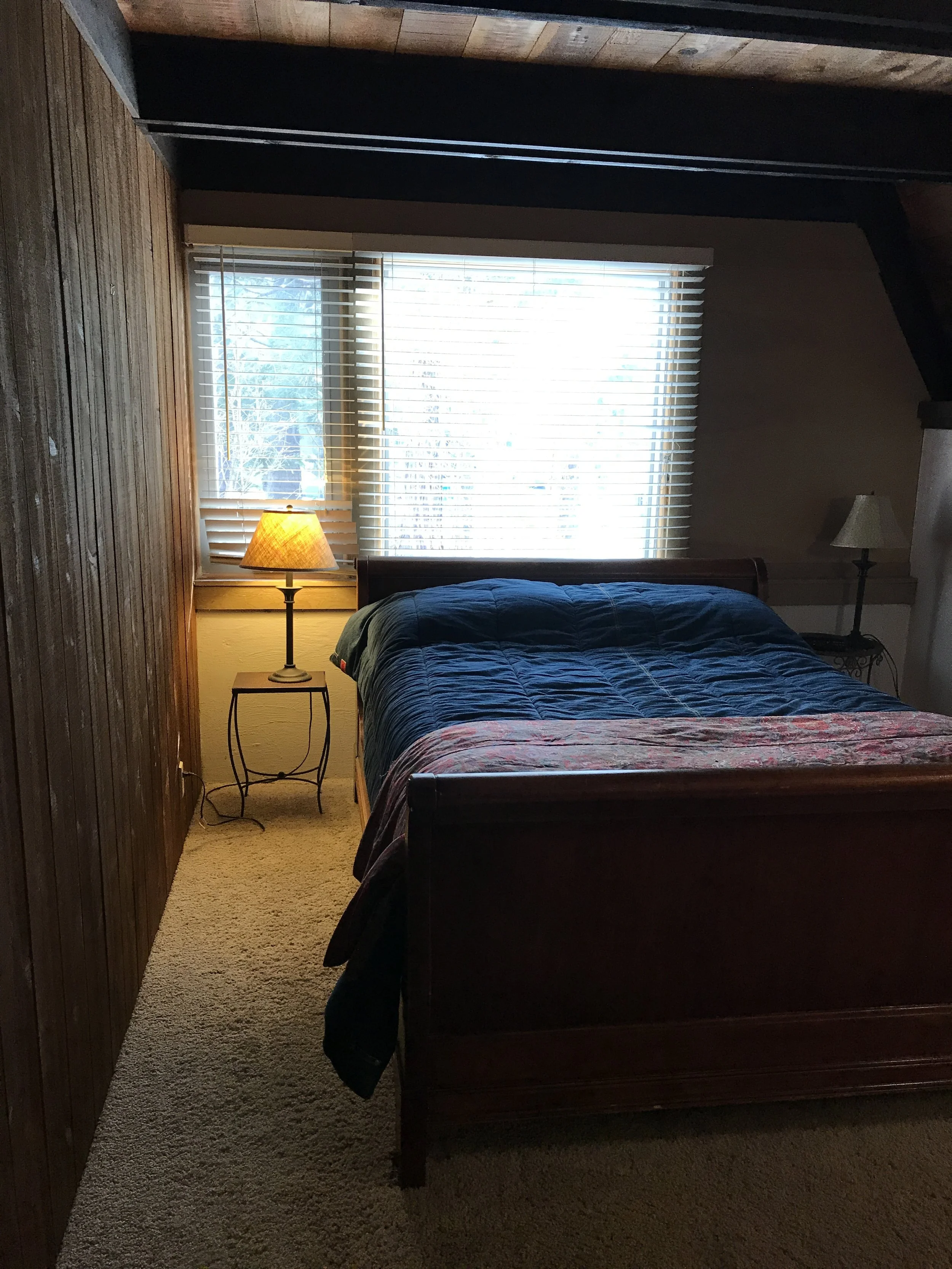
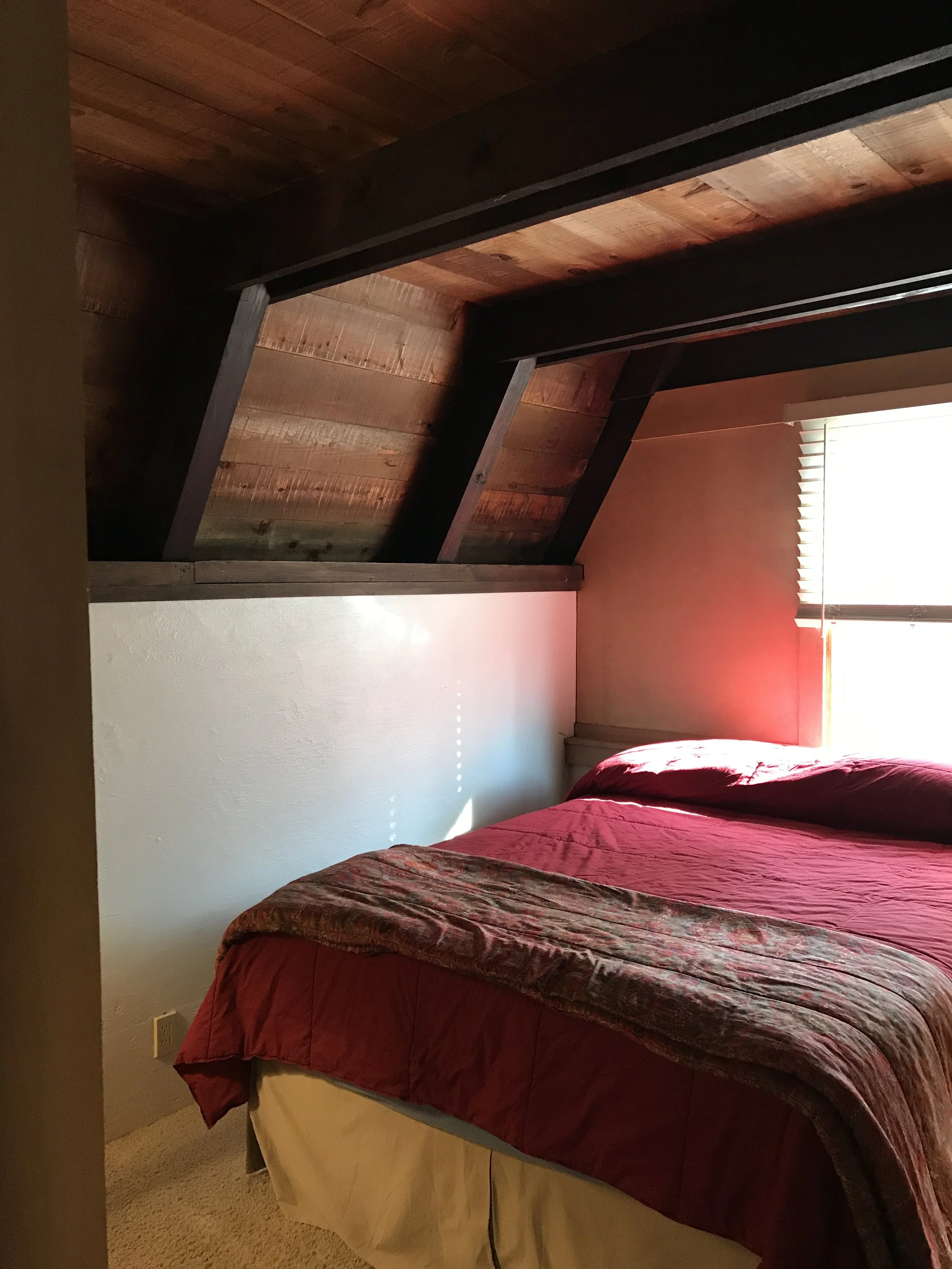
Stuga ’66 takes its name from both history and my heritage — stuga, the Swedish word for cabin, and 1966, the year the Lake Tahoe A-frame was built. When we purchased the cabin, the architecture was iconic — steep lines, soaring ceilings, intimate scale — but inside, it felt dim and dated. The structure deserved better, so we took it all the way back. What followed was a full reimagining — one that would ultimately shape the foundation of Host House.
Down to the Studs: Respecting the Bones
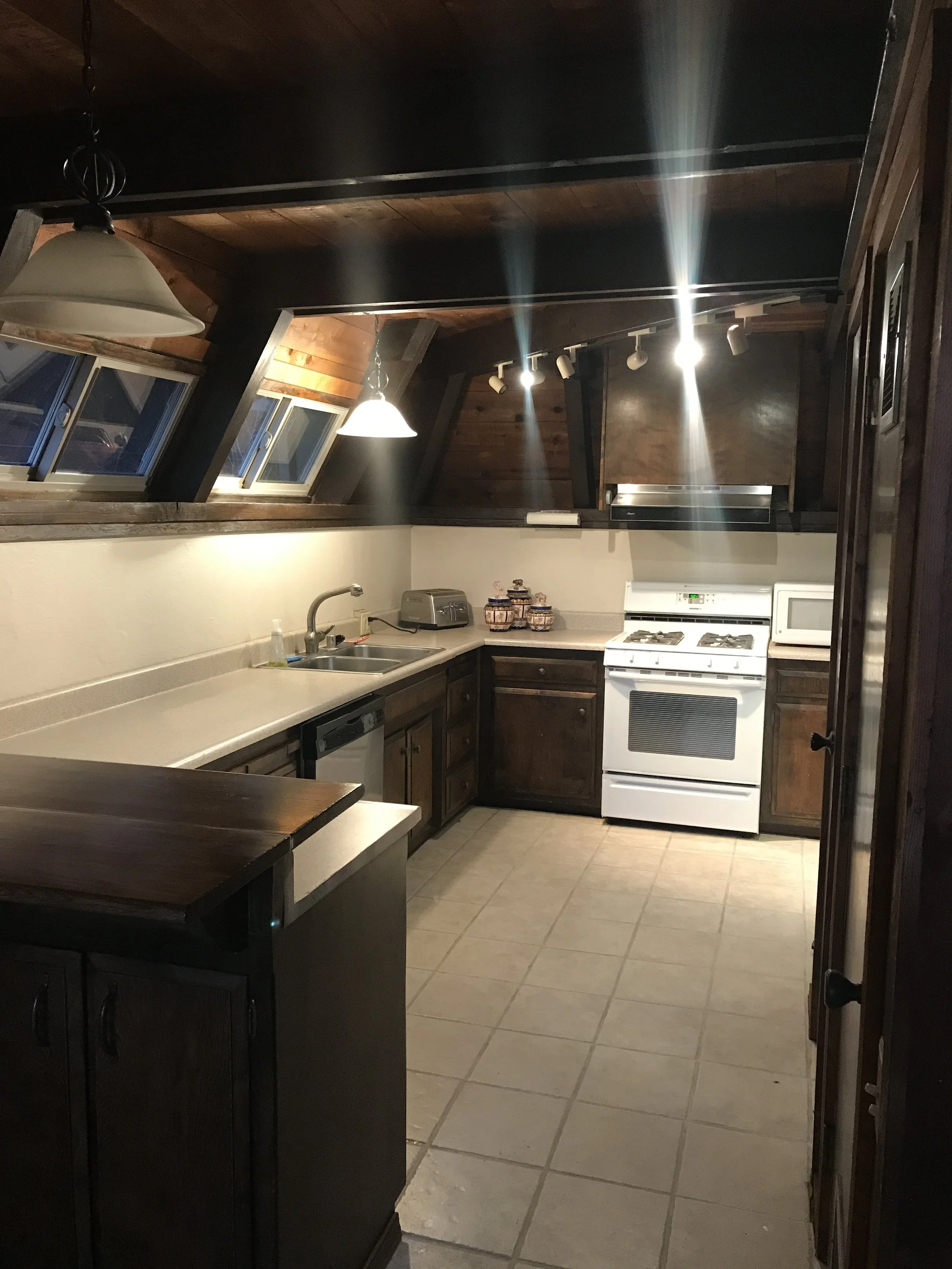
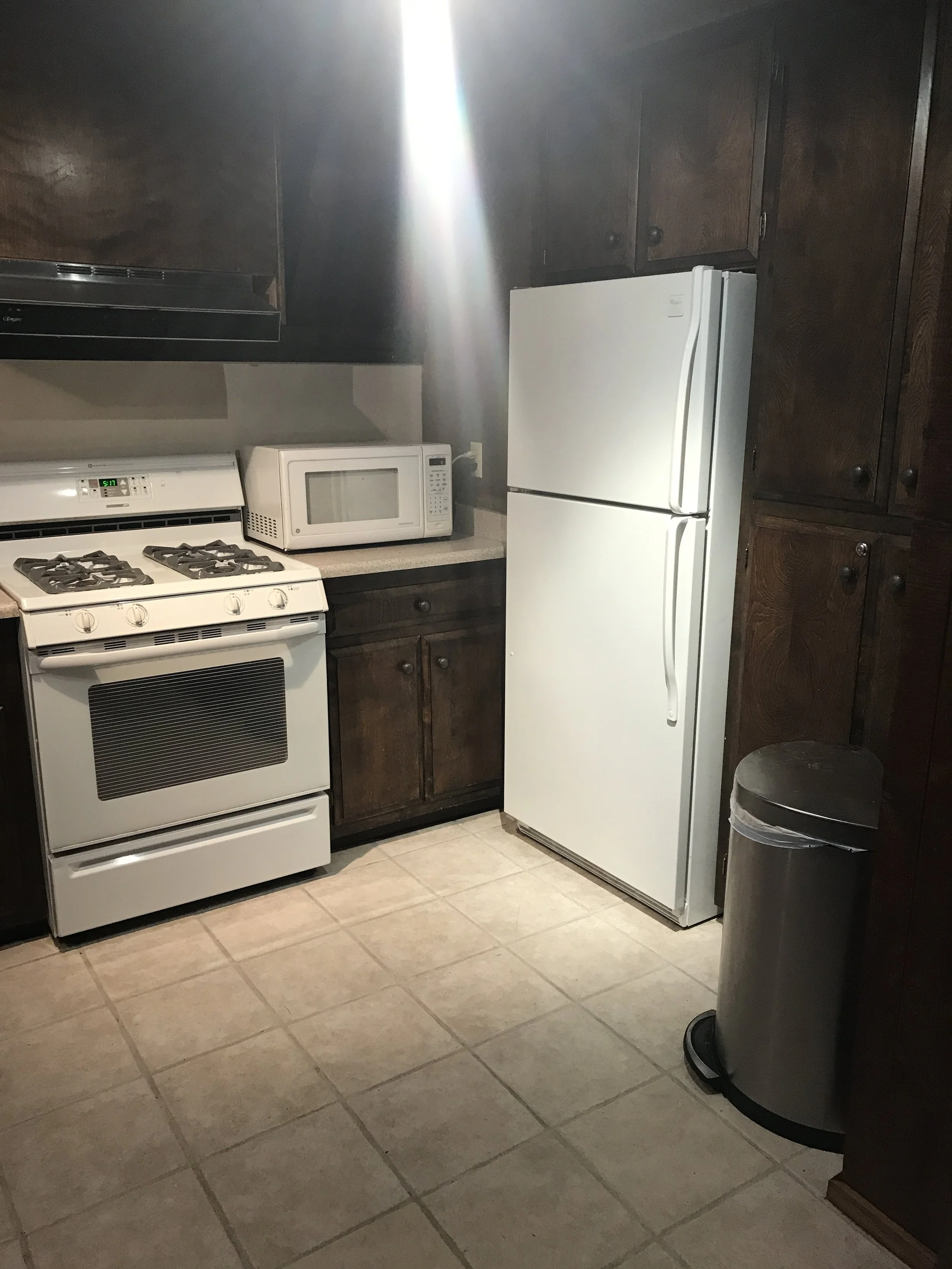
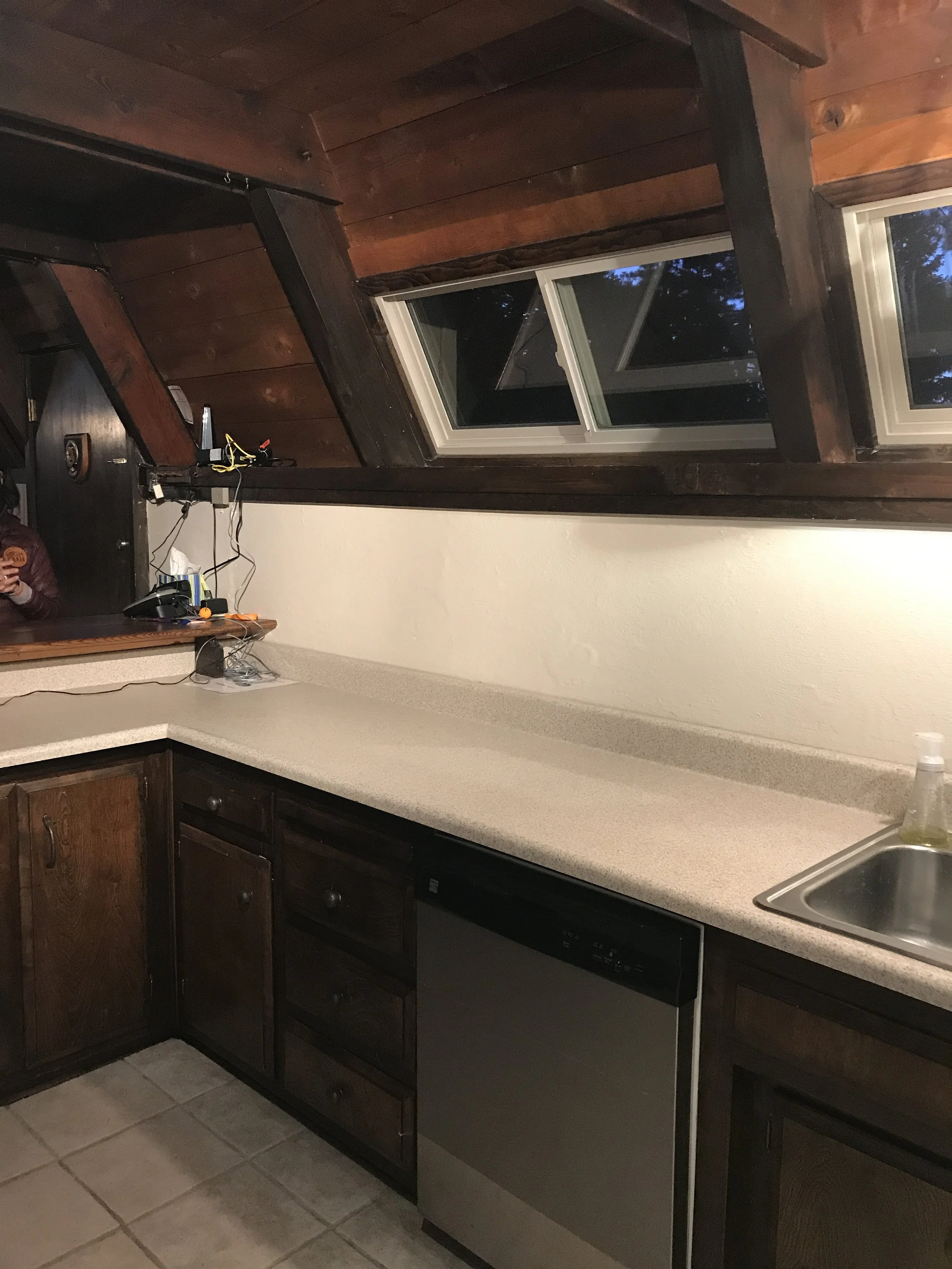
This wasn’t just a cosmetic refresh. We replaced all electrical and installed new plumbing. Updated mechanical systems. Reworked lighting placement. Resurfaced walls and ceilings. Rebuilt bathrooms. Gutted and redesigned the kitchen — all on a very conservative budget.
Renovating Stuga ’66 became a study in intention — respecting the bones while modernizing the infrastructure to support the way people live now.
The Defining Decision: Simply White
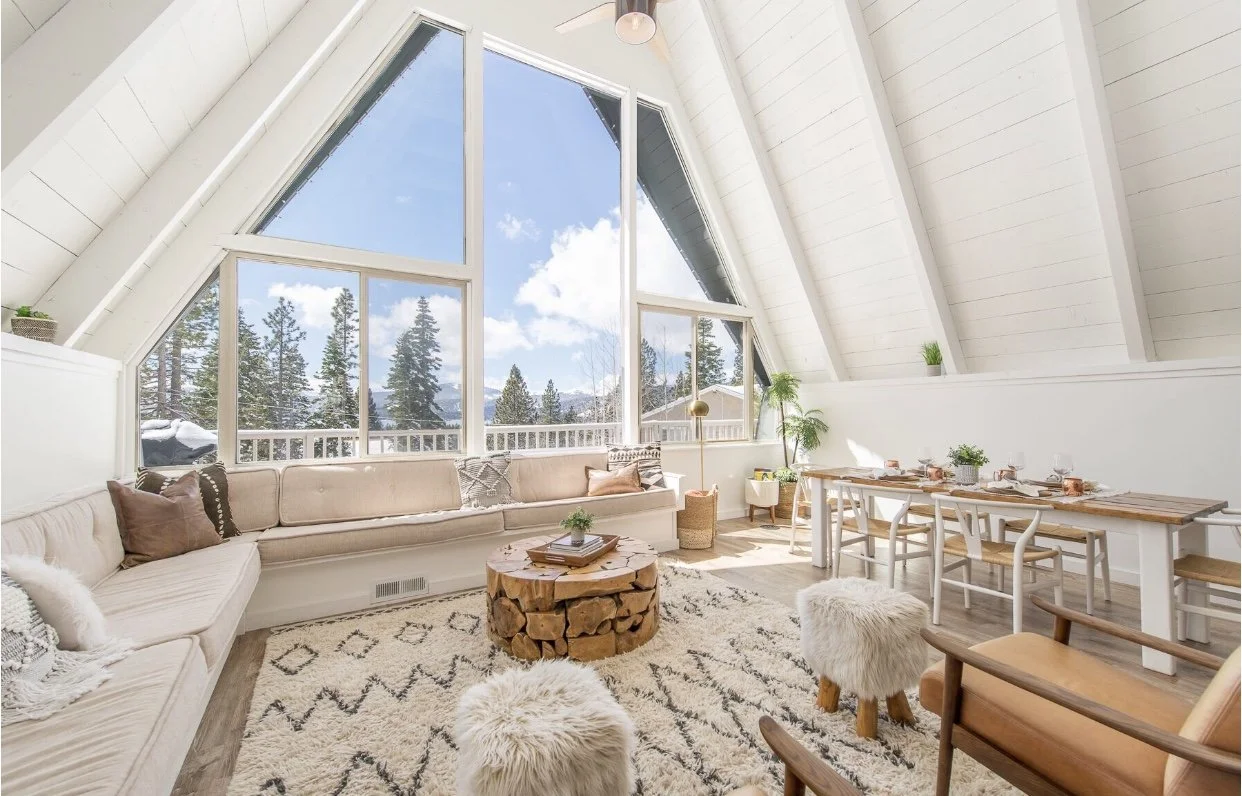
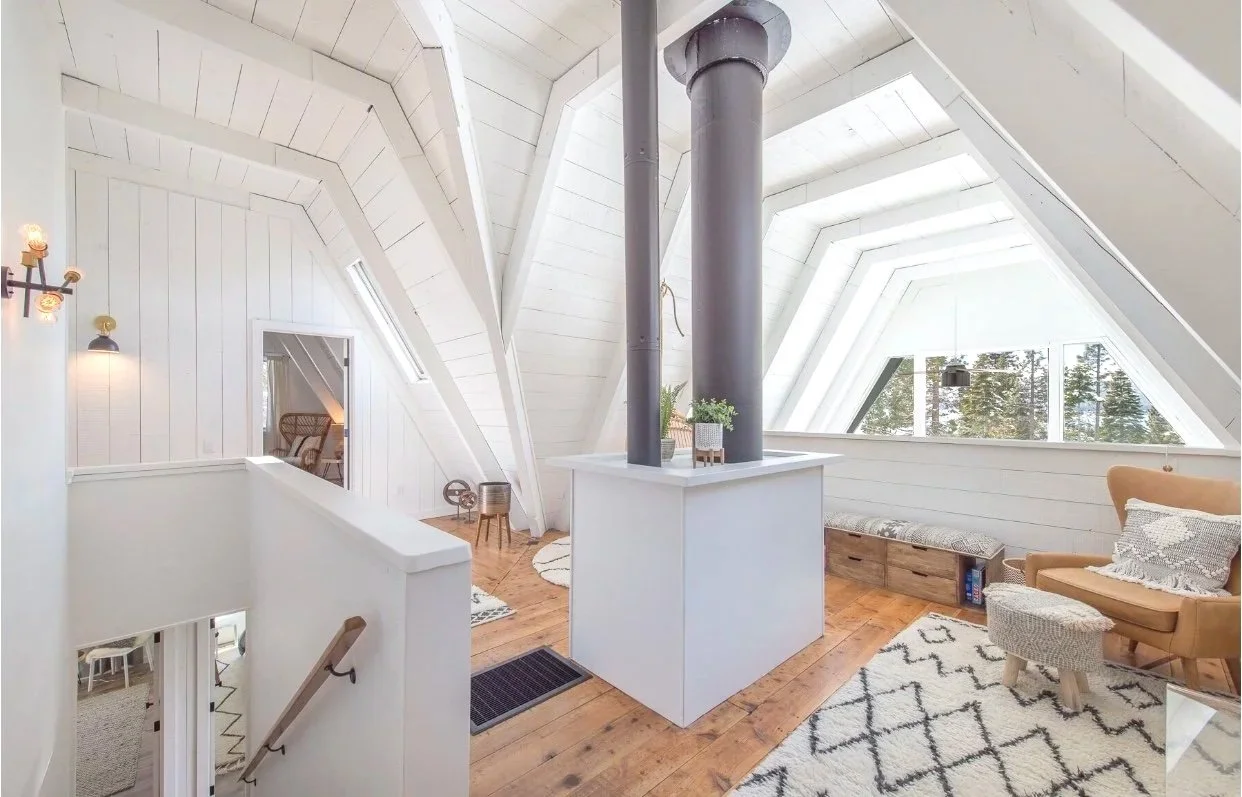
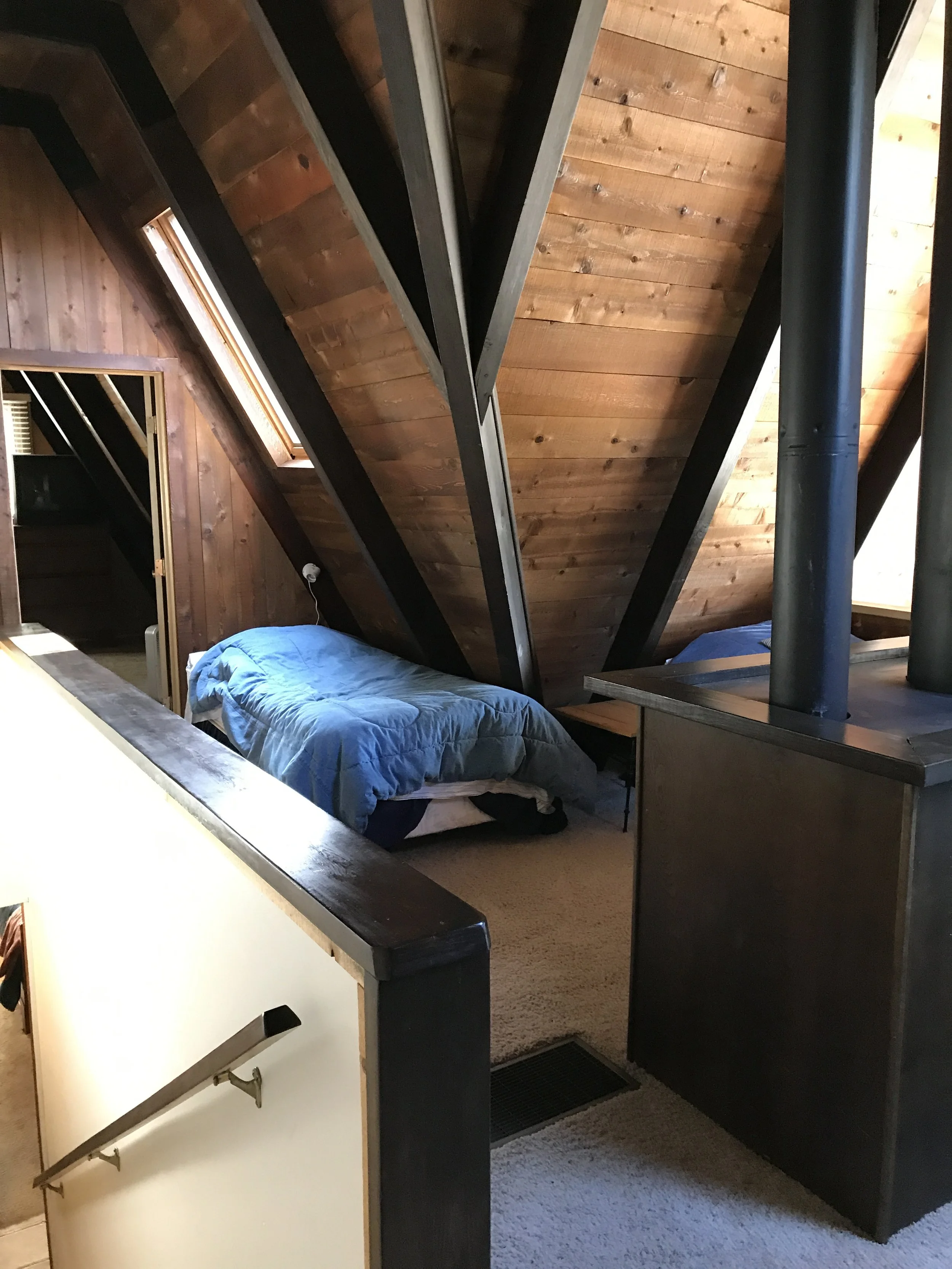
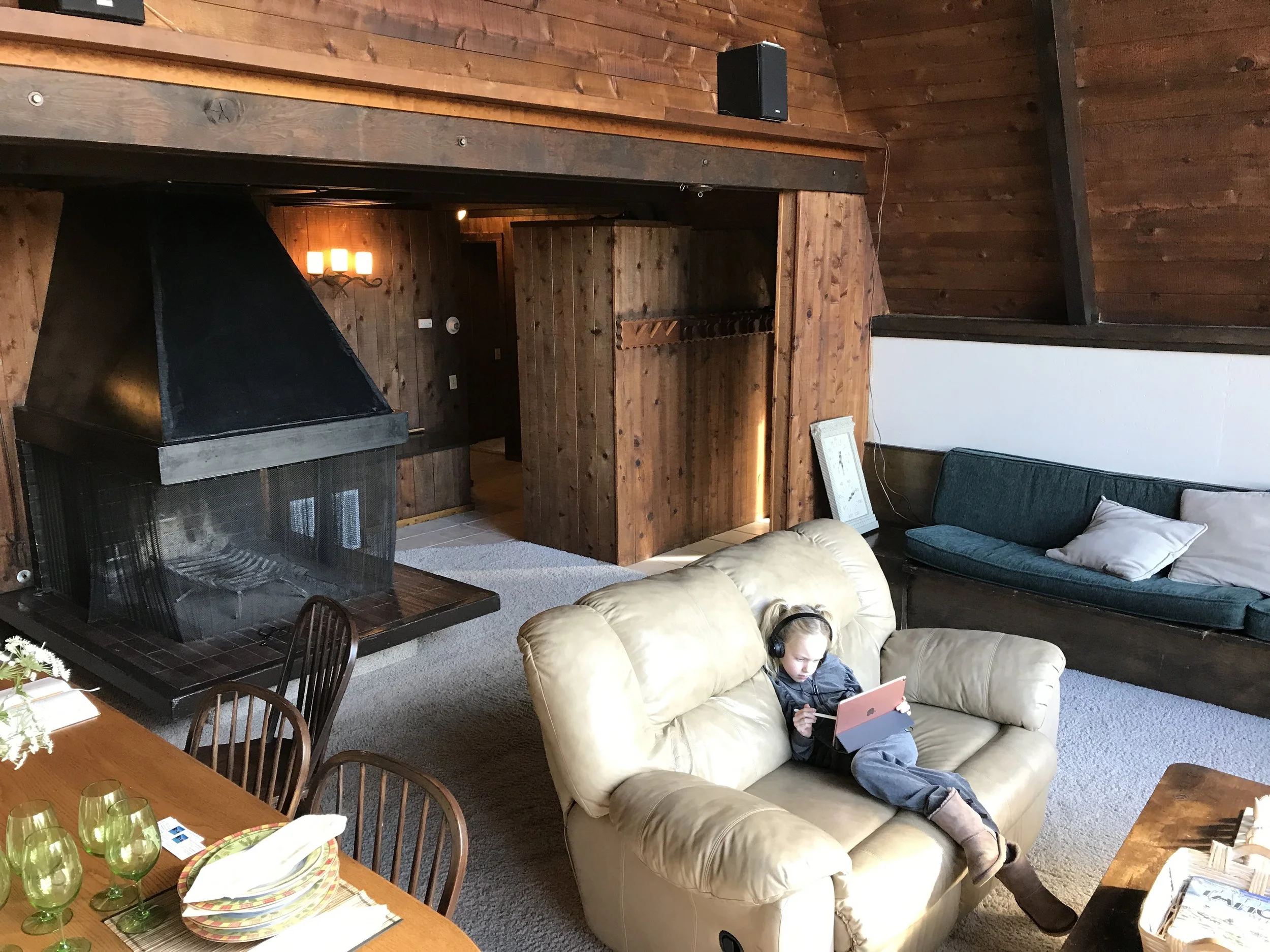
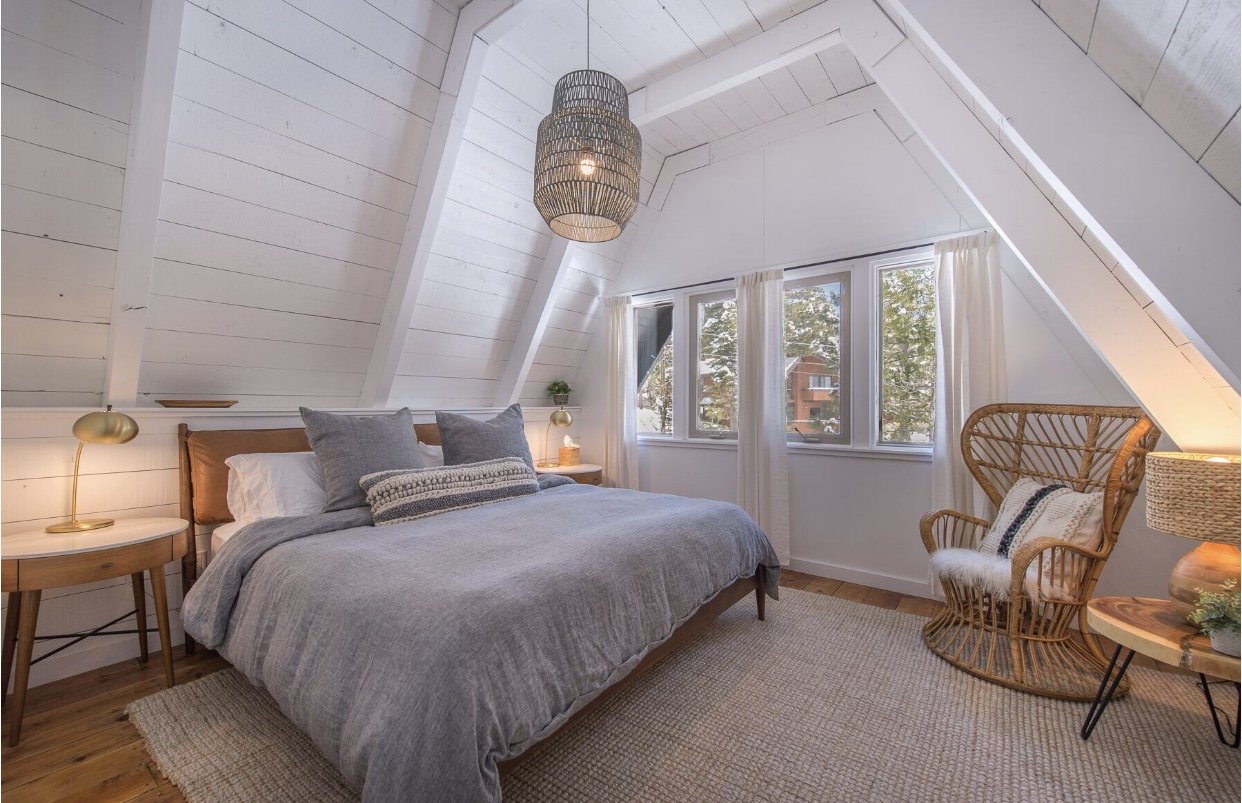
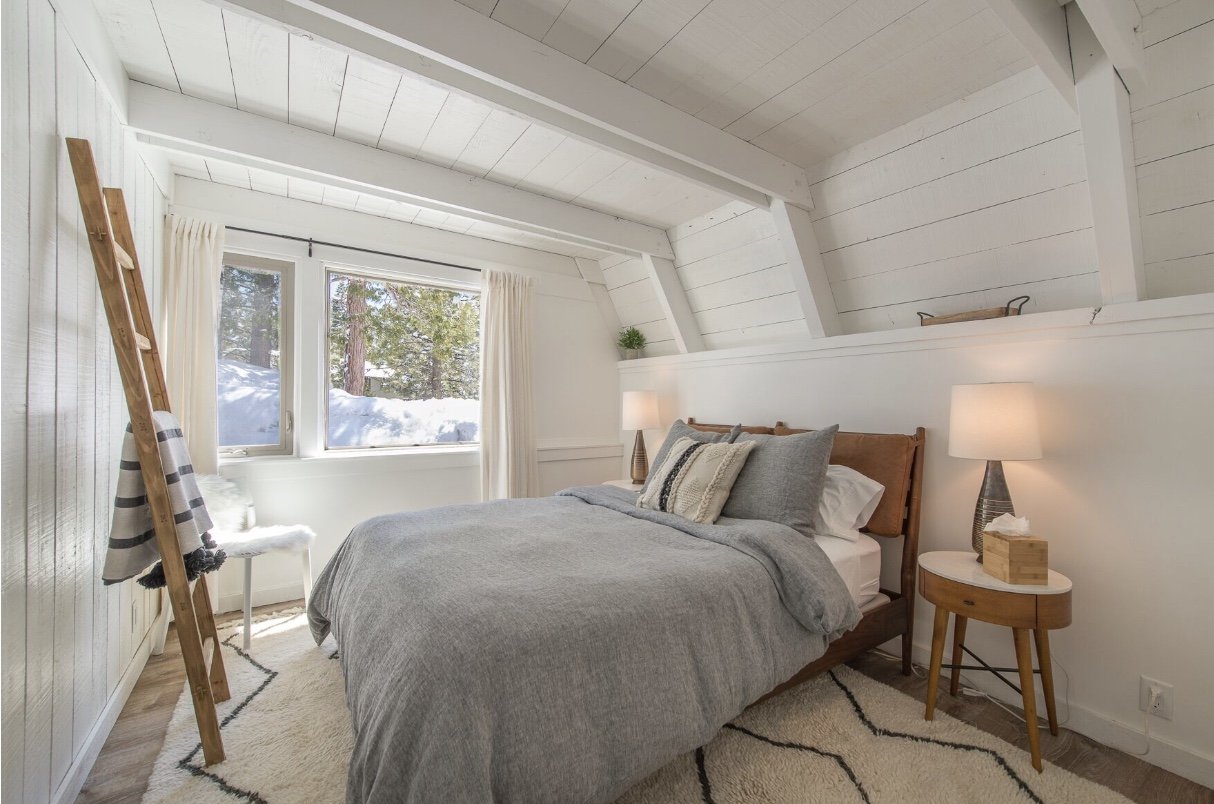
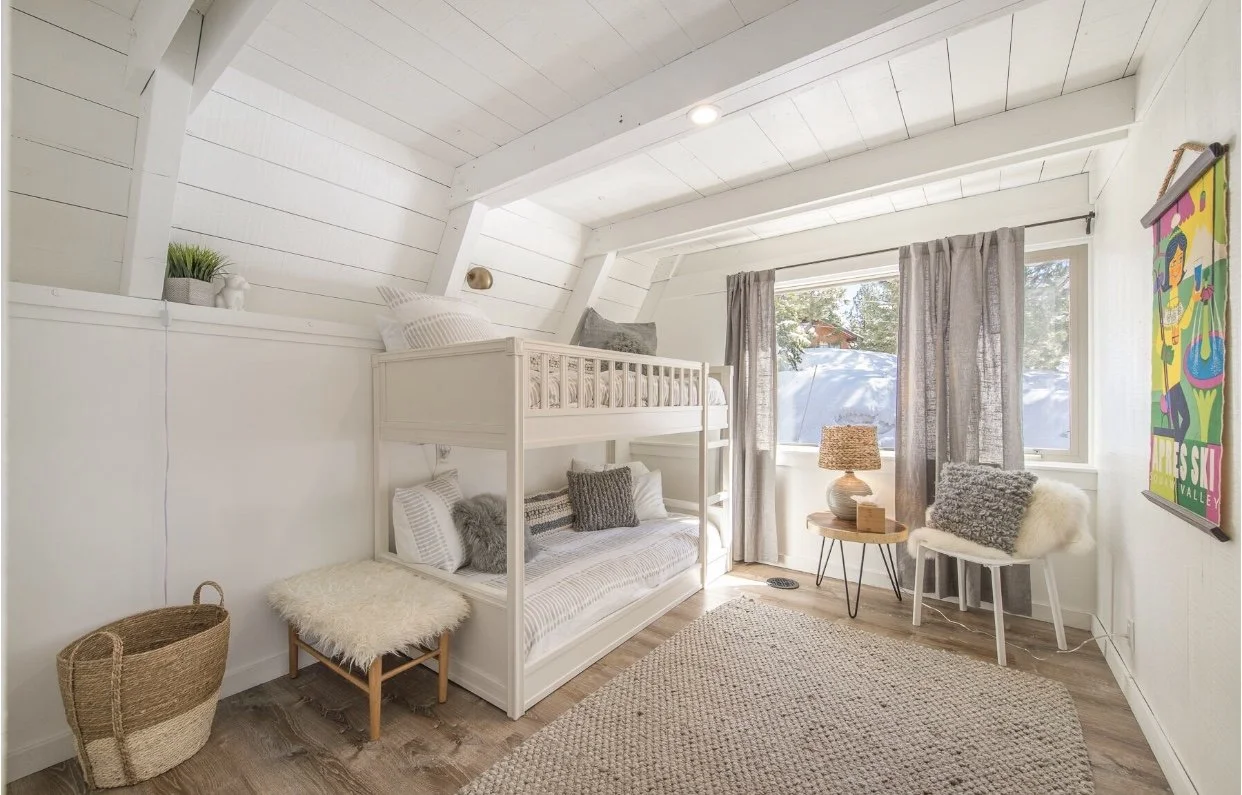
The most visible transformation began with one choice: painting every inch of dark wood in Benjamin Moore Simply White. Walls. Ceilings. Beams. Everything. Also the most controversial topic within my A-frame instagram community. You either loved it or hated it, no in-between.
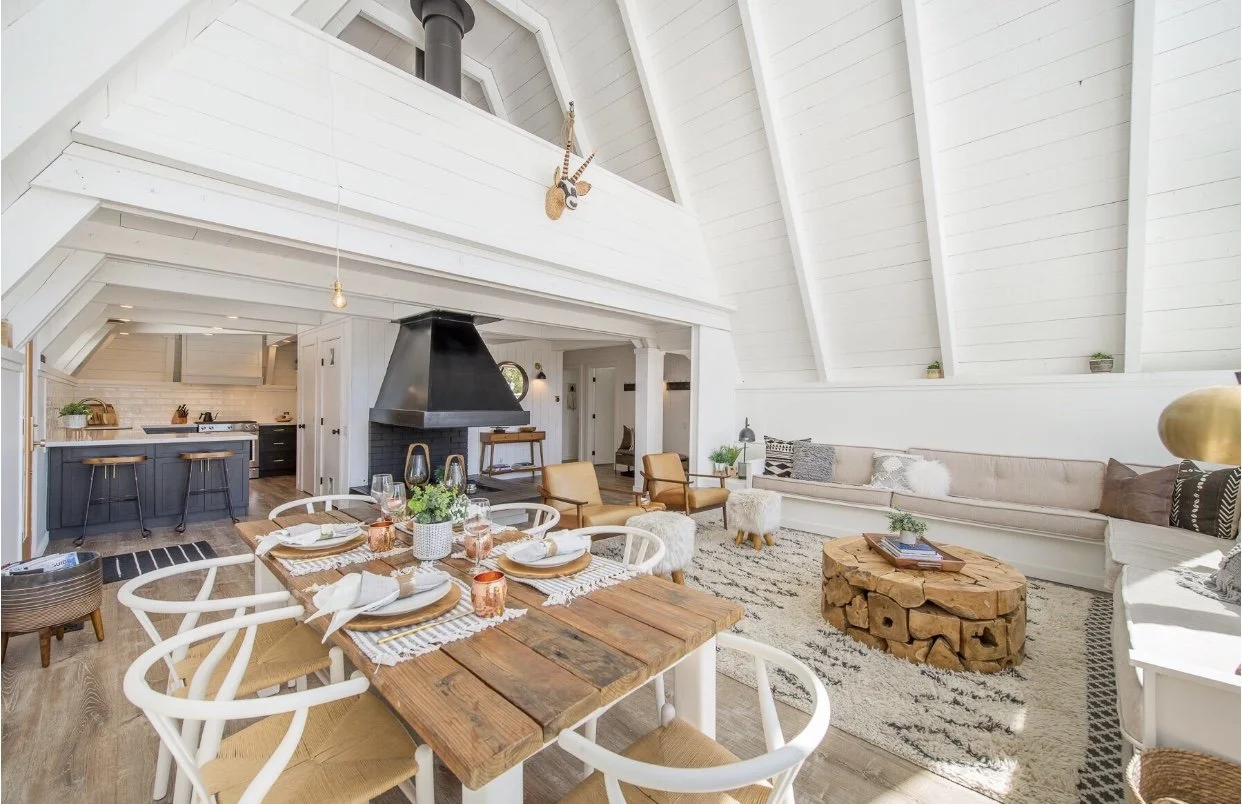
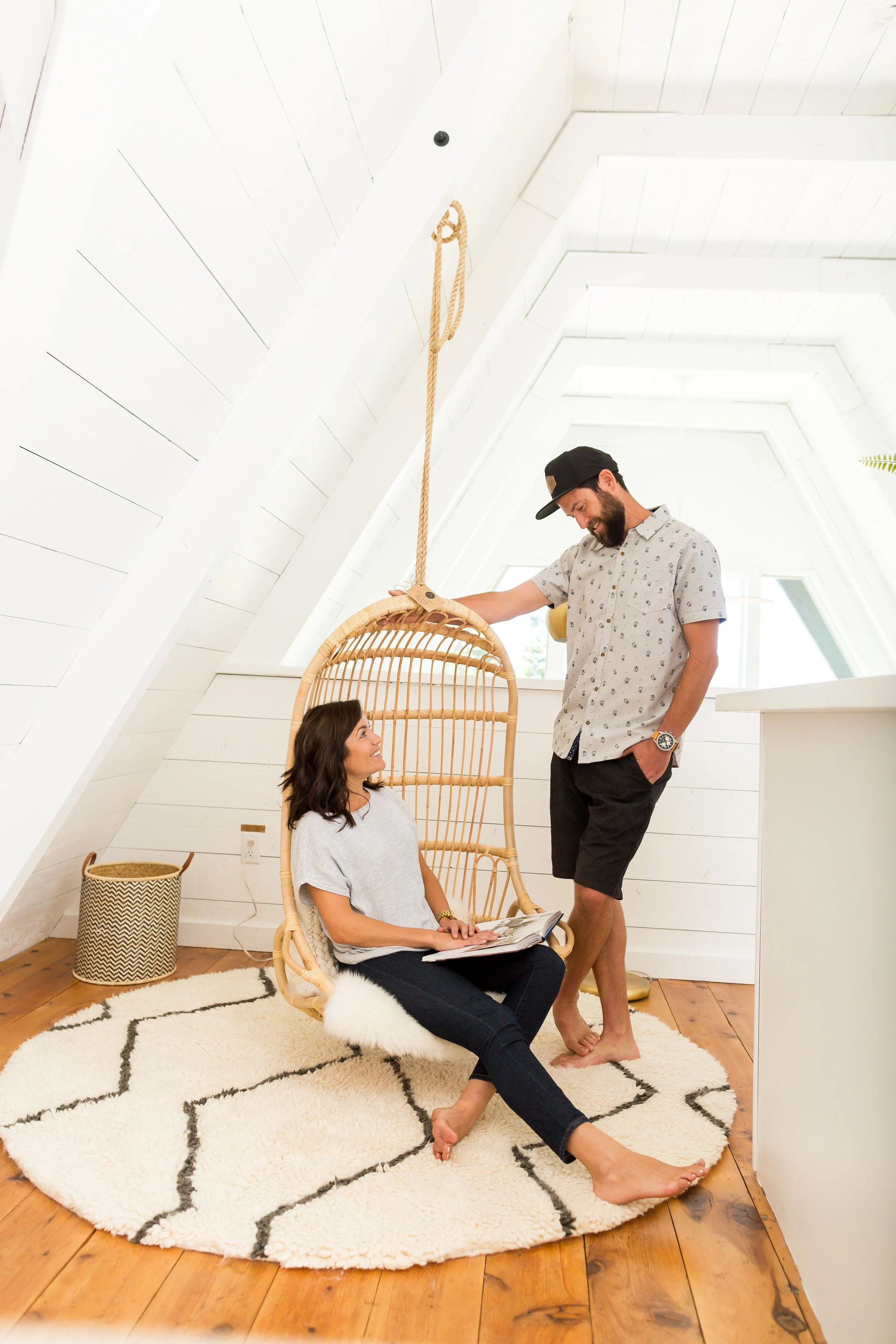
Where the cabin once absorbed light, it now reflects it. The A-frame lines — once heavy — became sculptural. The space expanded visually without changing a single structural angle.
Simply White allowed the architecture to speak. It created a quiet canvas for texture, warmth, and contrast.
Designing for an Experience: Not Just Aesthetics
From the beginning, the cabin had two purposes: For our family. And for future guests. I wasn’t just renovating and redesigning — I was crafting an experience.
After construction was complete, I moved into the phase I loved most: Furnishing. Layering. Stocking. Preparing. I selected every piece intentionally — custom neutral upholstery in performance fabrics, warm leather chairs, textured rugs, reclaimed wood tables.
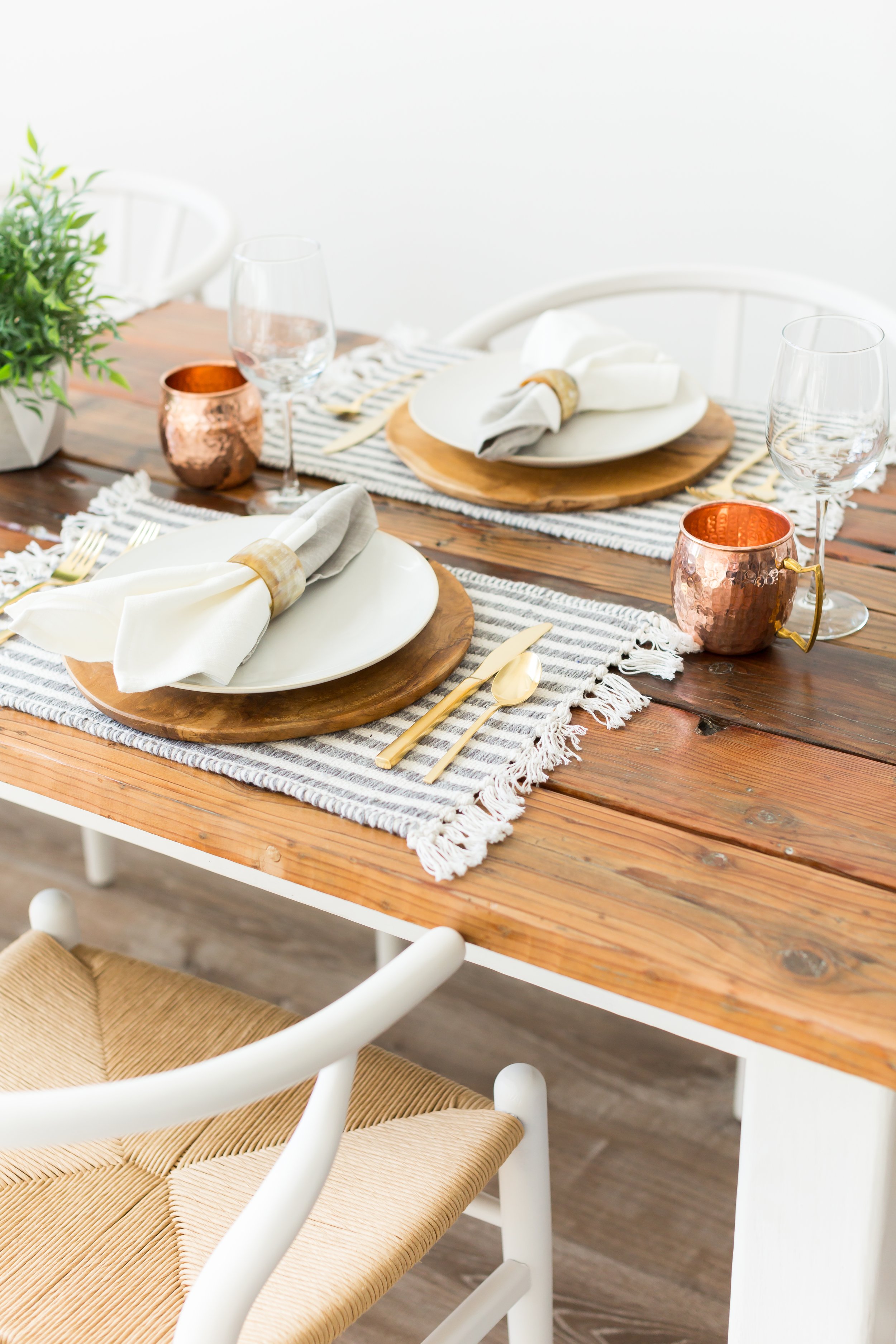
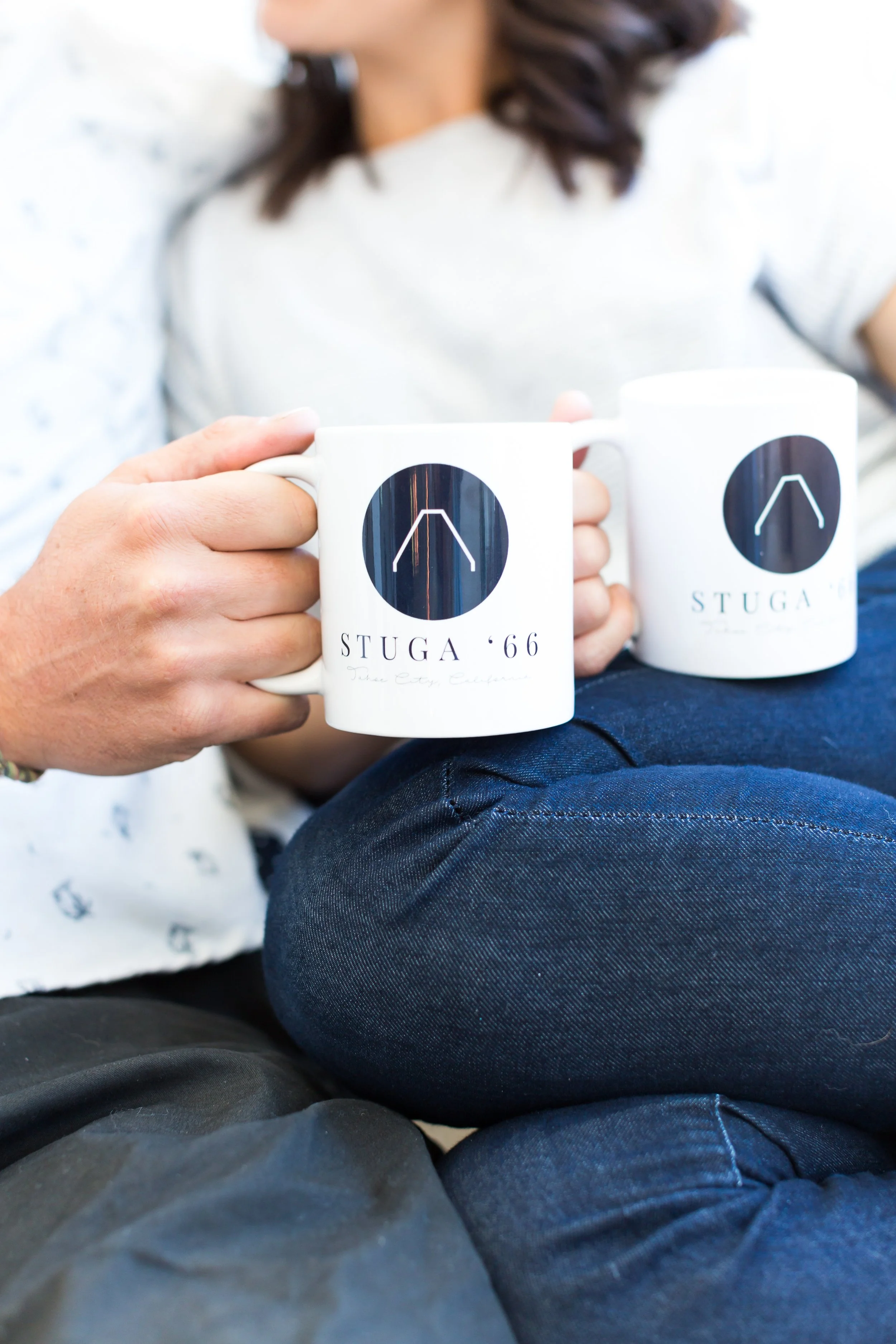
But beyond design, I focused on the details most people overlook. Every bed was layered with hotel-quality linens. Every bathroom stocked with plush towels. The kitchen fully equipped — not just styled. Sharp knives. Quality cookware. Matching dinnerware. Wine glasses that felt substantial. Moscow mule jugs with recipe recommendations. Serving platters. Coffee tools. Branded mugs. Spices. Everyday essentials.
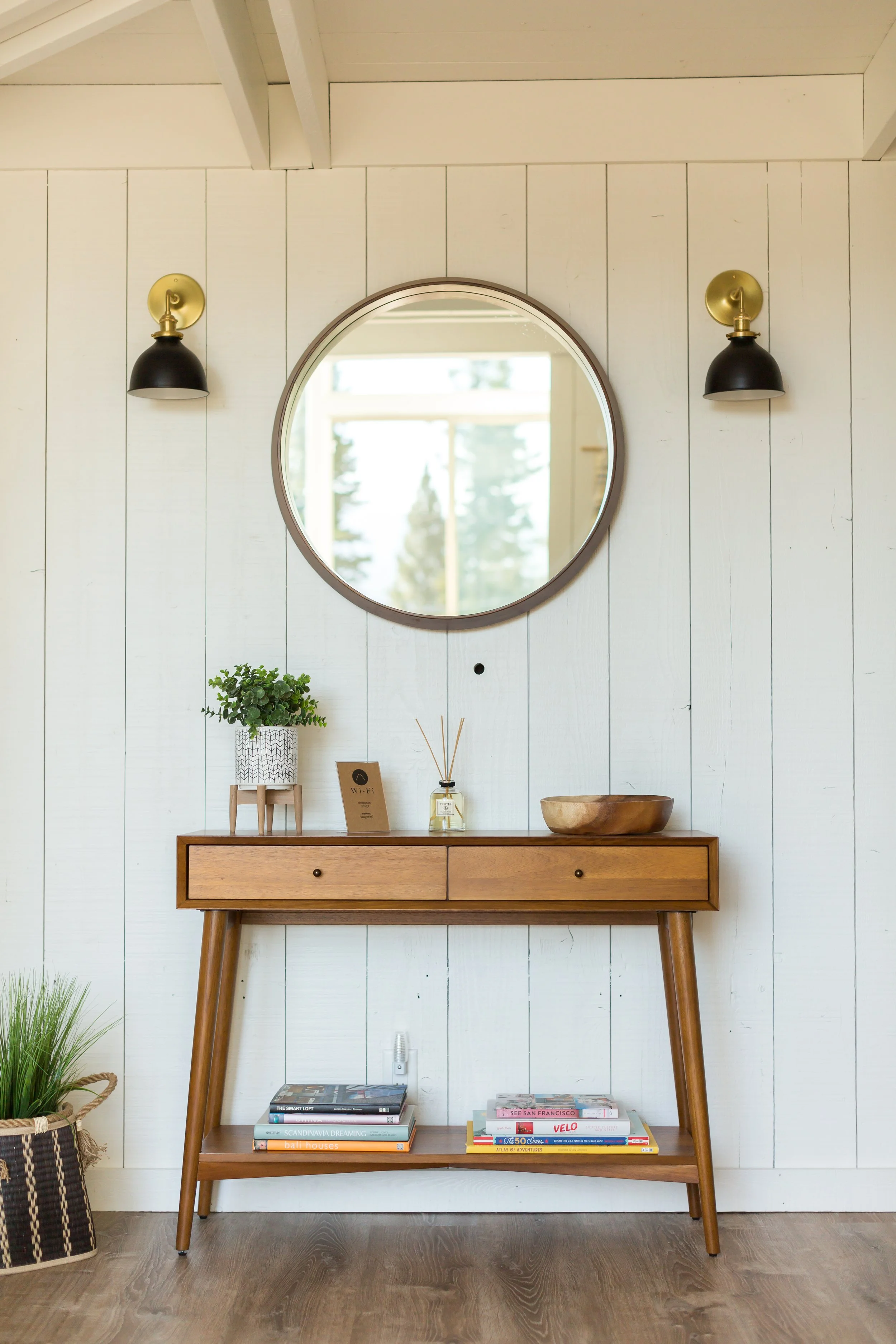
I wanted guests to arrive and feel immediately at ease — welcome note framed in the entry — as though the cabin anticipated their needs.
That process — fully renovating, fully furnishing, fully preparing a vacation home for others — is what I fell in love with.
The Kitchen: Contrast and Function
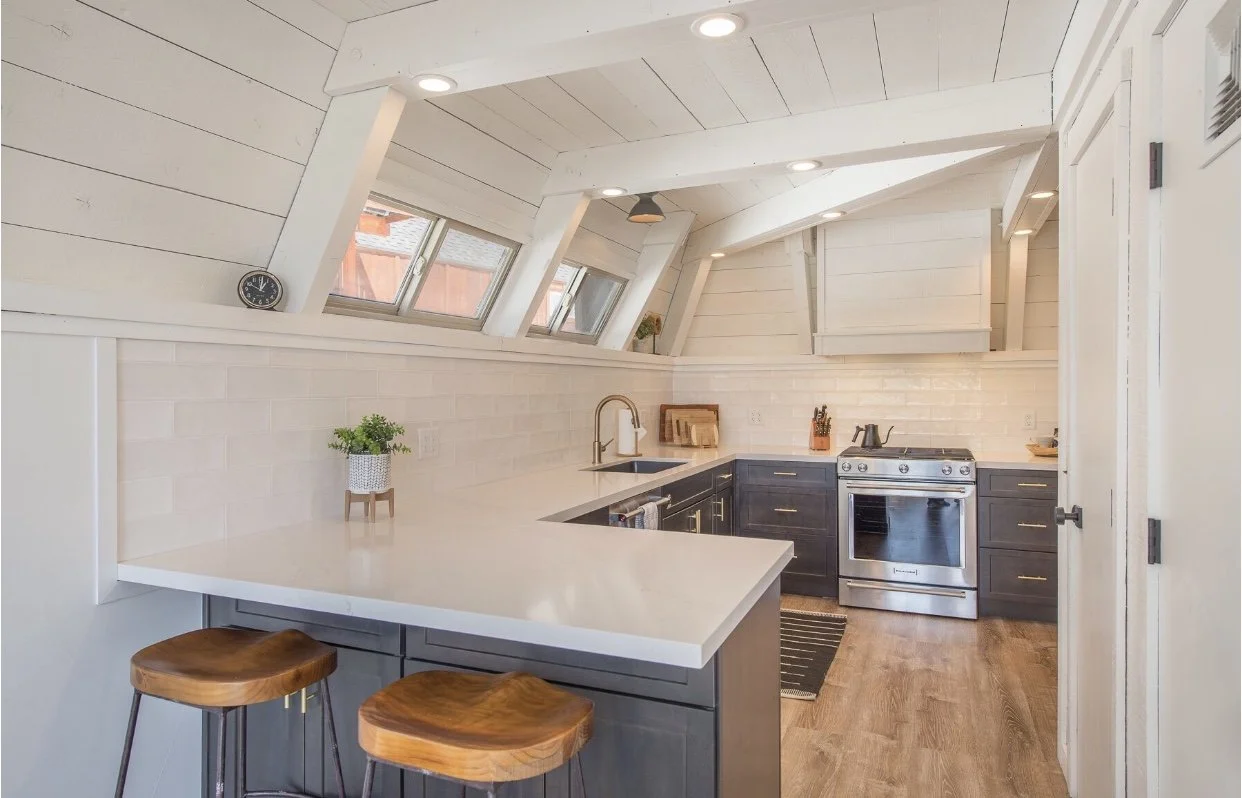
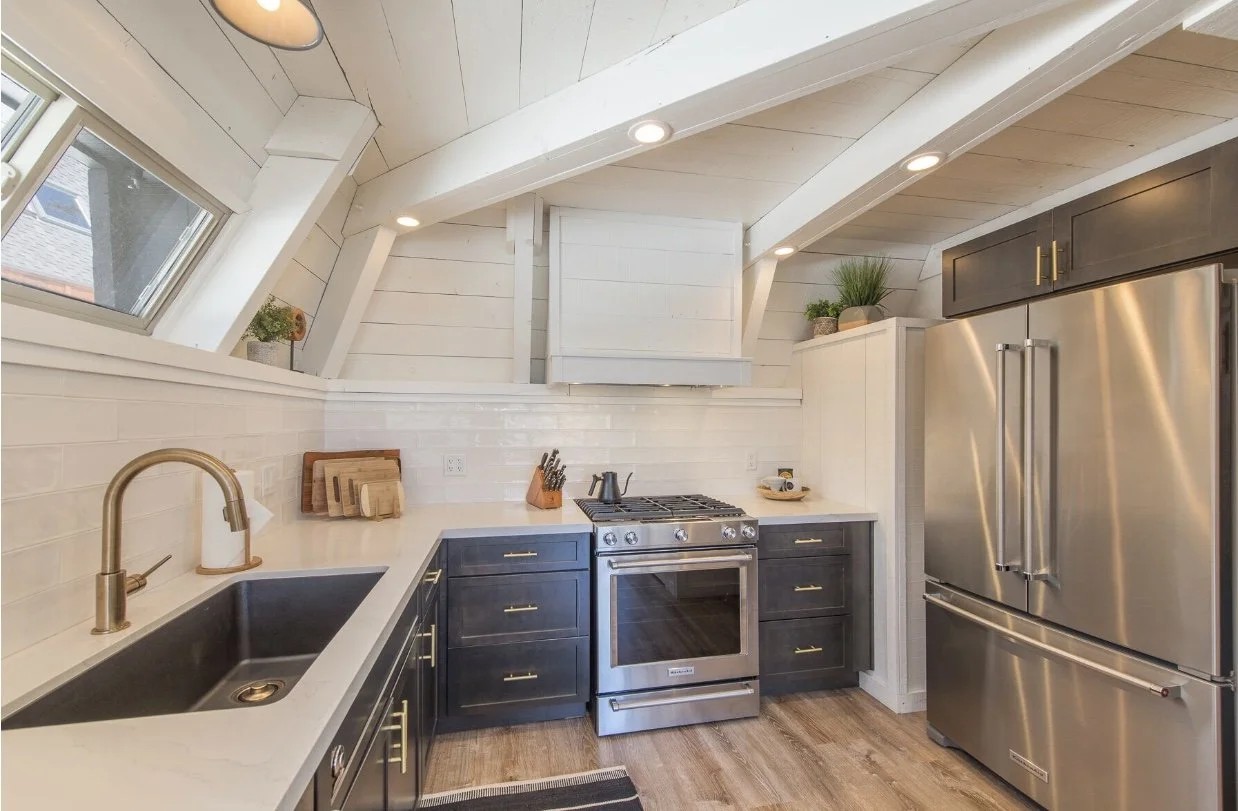
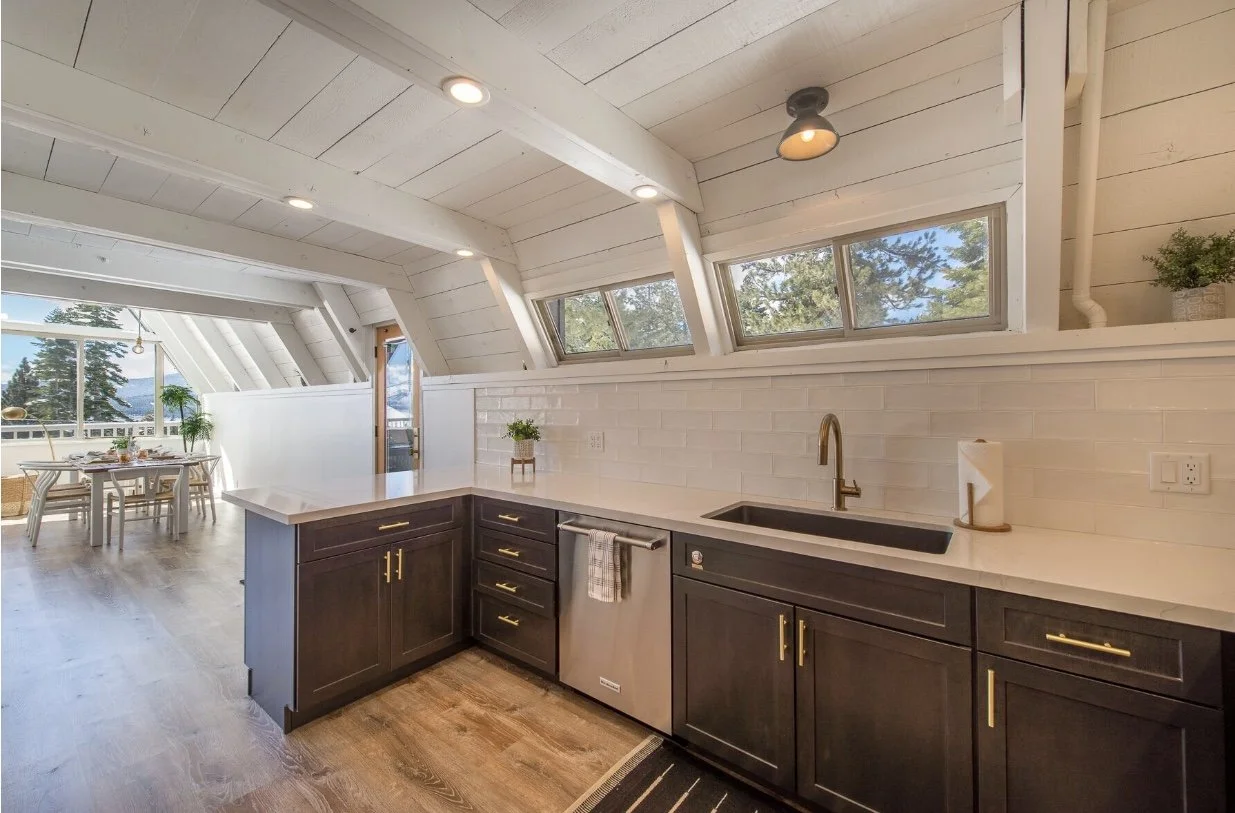
We completely redesigned the kitchen with hosting in mind. Deep cabinetry grounds the white envelope. Durable white countertops reflect light. Brass hardware warms the space. An expanded peninsula invites gathering.
But equally important: flow. Guests move differently in a home than owners do. The layout had to feel intuitive. Accessible. Durable. Beauty was essential. Function was non-negotiable.
Bedrooms: Where Five-Star Reviews Begin
If you want a five-star Airbnb, start with sleep. Each bedroom was designed as a retreat — layered linens, soft neutral palettes, thoughtful lighting. Comfort earns trust. Consistency earns reviews.
Stuga ’66 quickly became a 5-star Airbnb, with guests consistently mentioning how calm, bright, and intentionally designed it felt.
The design wasn’t flashy. It was cohesive. It was comfortable. It worked.
Before Host House: A Different Kind of Planning
Long before Stuga ’66, my career revolved around planning. I began in event coordination in Shanghai, China with the U.S. Chamber of Commerce — where precision, logistics, and structure were everything in Government events with U.S. Presidents, Chineses officials and Fortune 50 CEOs. From there, I moved into corporate events and brand marketing with Target, designing experiences that required both strategy, tremendous creativity and aesthetic cohesion. Eventually, I ran my own event business for over a decade in Carmel — producing hundreds of celebrations for private clients and more weddings in Carmel than I can count.
And while I loved the orchestration of it all, I eventually felt something shift. Event design and production is beautiful — but it is fleeting. Months of preparation for a single day. Then it’s gone. By the time I finished one too many weddings, I knew I wanted to create something lasting. Little did I know at the time, Stuga ’66 became that turning point.
The Moment Host House Was Born
Somewhere between sourcing furniture and labeling kitchen shelves, I realized something: The process itself was what energized me. Not just design — but completion. Taking a home from raw construction, to curated interior, to fully stocked experience, to guest-ready hospitality.
That arc — from vision to execution — became the blueprint for Host House. Stuga ’66 taught me that vacation home design is its own discipline. It requires: Aesthetic restraint. Operational thinking. Durability. Flow. Inventory awareness. Guest psychology. And heart.
Host House was built from that understanding, and ultimately from my learning process nine years ago.
A Cabin Reimagined: Enjoyed by Many
Today, Stuga ’66 feels timeless. The white envelope highlights the architecture. The layered textures soften the structure. The infrastructure supports modern living. The experience supports meaningful stays.
It is a mountain cabin — but elevated. It is minimal — but warm. It is simple — but deeply considered.
Our A-frame now belongs to new owners who cherish the home as much as we did, while Airbnb guests continue to gather beneath its brightened beams and vaulted ceilings. Watching it live on still fully furnished with my selections — beautifully maintained and fully enjoyed — is the greatest compliment. If you’d like to experience it yourself, you can book a stay here through Airbnb or reach out to Modern Mountain Vacations.
Shop This Home: Below are some of the foundational elements that shaped Stuga ’66.
PAINT: Benjamin Moore – Simply White (OC-117). The defining layer that transformed the entire structure.
LIVING ROOM: Leather Arm Chairs, Custom Upholstered Built-in Sofa Cushions in Neutral Performance Fabric, Moroccan Area Rug, Sheepskin Ottoman, Reclaimed Wood Coffee Table, Black + Cream Layered Throw Pillows, Throw Blankets
KITCHEN: Brass Cabinet Pulls, Brass Kitchen Faucet, Kitchen Sink, Matching Stove, Dishwasher, and Refrigerator
HOSTING ESSENTIALS: Quality Cookware Set, Serveware, Complete Dinnerware Collection, Dishwasher Safe Flatware, Glassware, Sharp Knife Set, Cutting Boards, Pour Over Coffee Set + Kettle, Placemats, Natural Linen Napkins
DINING: White Wishbone Dining Chairs, DIY Reclaimed Wood Dining Table
BEDROOMS: Hotel-Quality Linen Duvet Covers, White Sheets, Bed Frame with Leather Headboard, Warm Wood Nightstands, Minimal Wall Sconces, Luggage Racks, Matching Hangers, Neutral Laundry Baskets
LOFT: Hanging Chair, Leather Arm Chair, Moroccan Area Rug, Round Rug, Board Games, Storage Bench
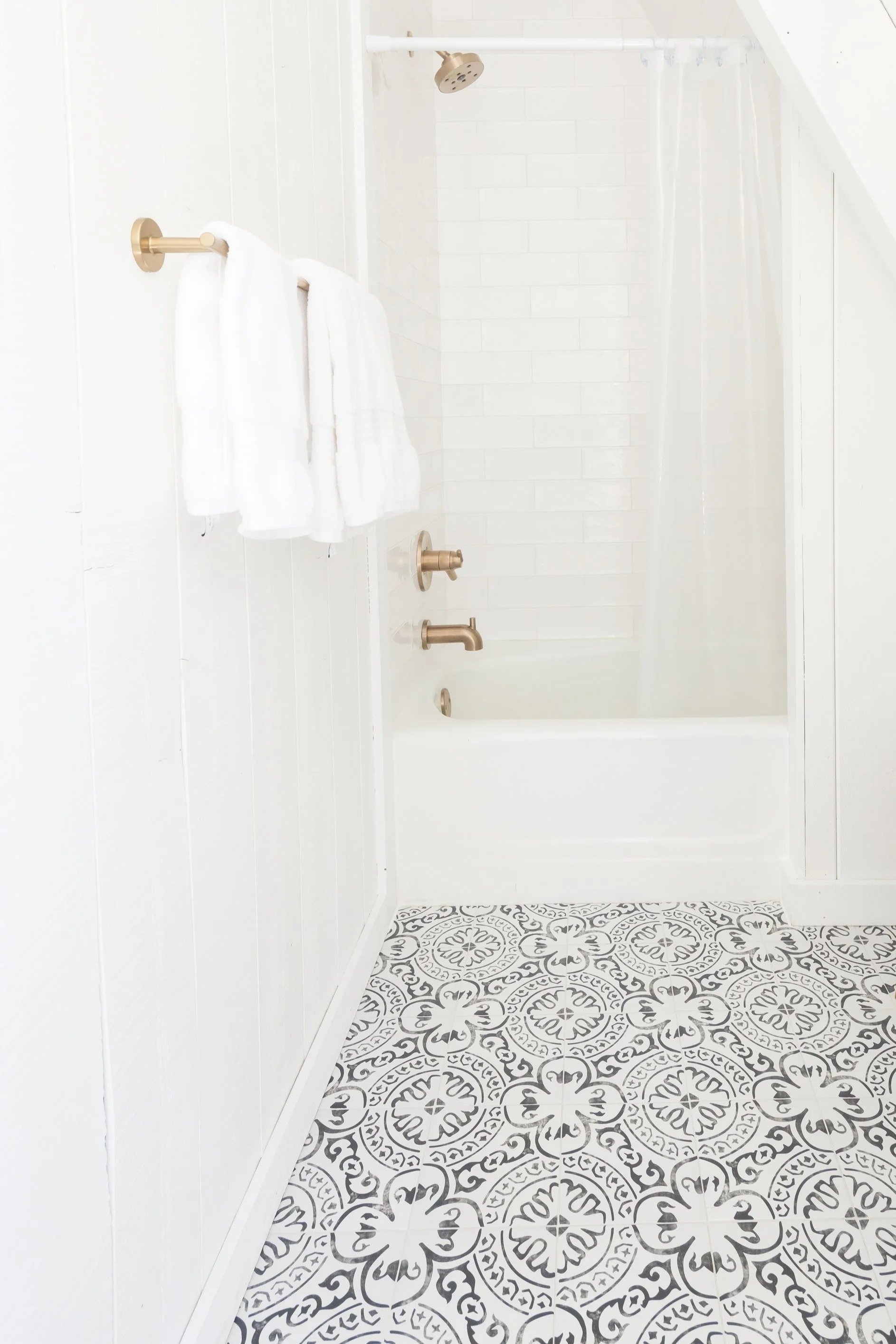
BATHROOMS: Brass Bathroom Faucet, Brass Hardware, Plush White Bath Towels, Oversized Beach Towels, Organic Bath Products
About Host House
The concept of Host House originated during the renovation of Stuga ’66 — a 1966 Lake Tahoe A-frame that became a five-star Airbnb and the unexpected beginning of something much larger.
What began as a personal renovation evolved into a deeper calling: transforming spaces from the inside out — thoughtfully, completely, and with intention at every layer. From construction oversight and system upgrades to furnishing, styling, and fully stocking homes for real life, I discovered that the magic lives in the details.
Today, Host House extends far beyond mountain home renovations. My Carmel-by-the-Sea home retail shop, opened in 2023 — now evolved into a curated showroom and design studio — is where I meet with clients, source materials, review plans, and bring projects to life. It’s a working studio layered with textiles, lighting, furnishings, and thoughtfully chosen home stocking essentials that reflect the Host House aesthetic: warm, layered, livable.
Host House is both a physical space and a design philosophy. We guide interior design projects from concept to completion, including full-scale renovations, new builds, vacation homes, and primary residences. Whether designing a five-star guest experience or reimagining a family home, the approach remains the same: Intentional foundations layered in warmth and functional beauty — creating spaces designed to be lived in.
Stuga ’66 may have sparked the journey in Lake Tahoe back in 2017 — but Host House continues to evolve from my studio in Carmel-by-the-Sea, where every project begins. Learn more about our services here.